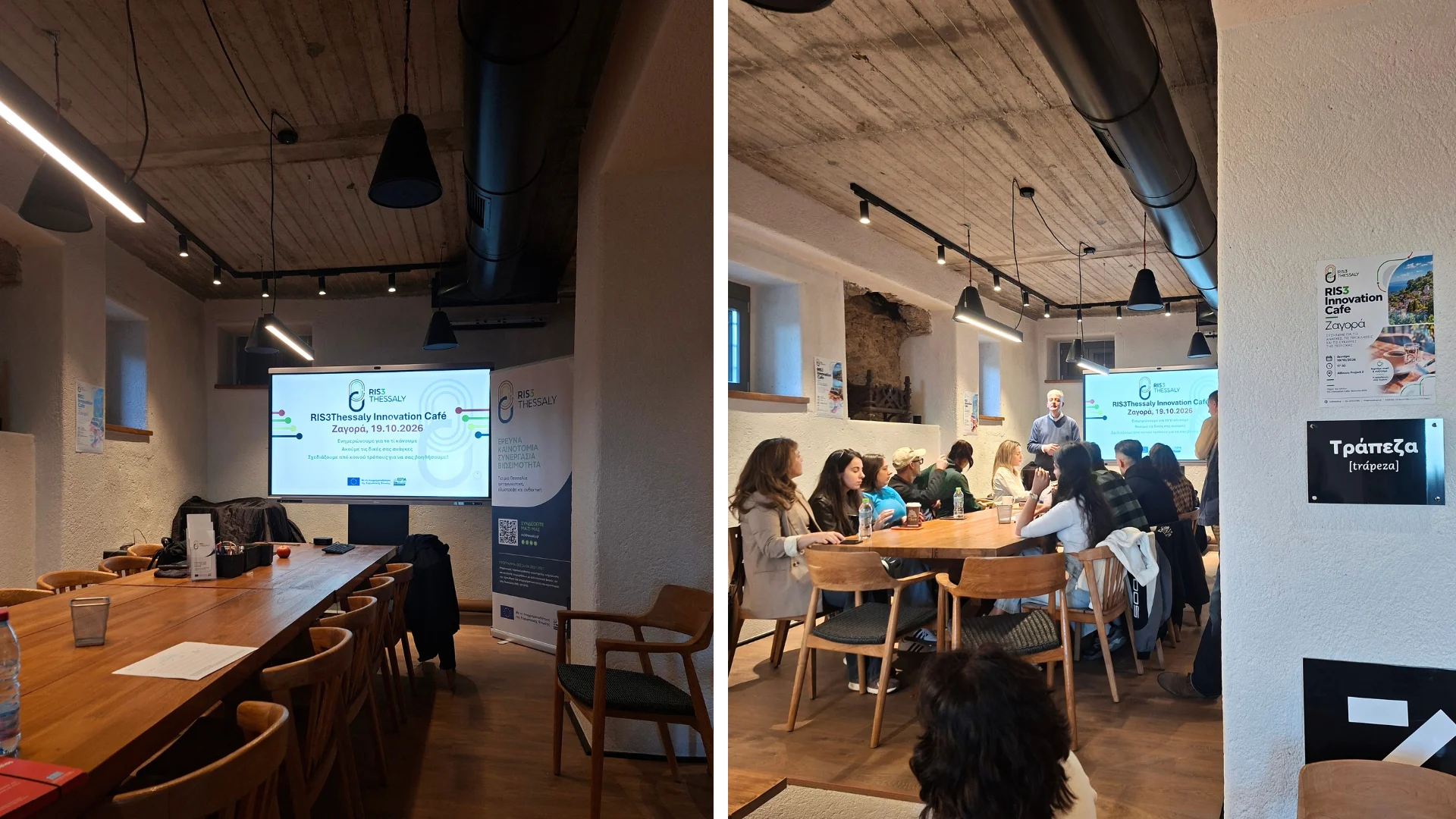
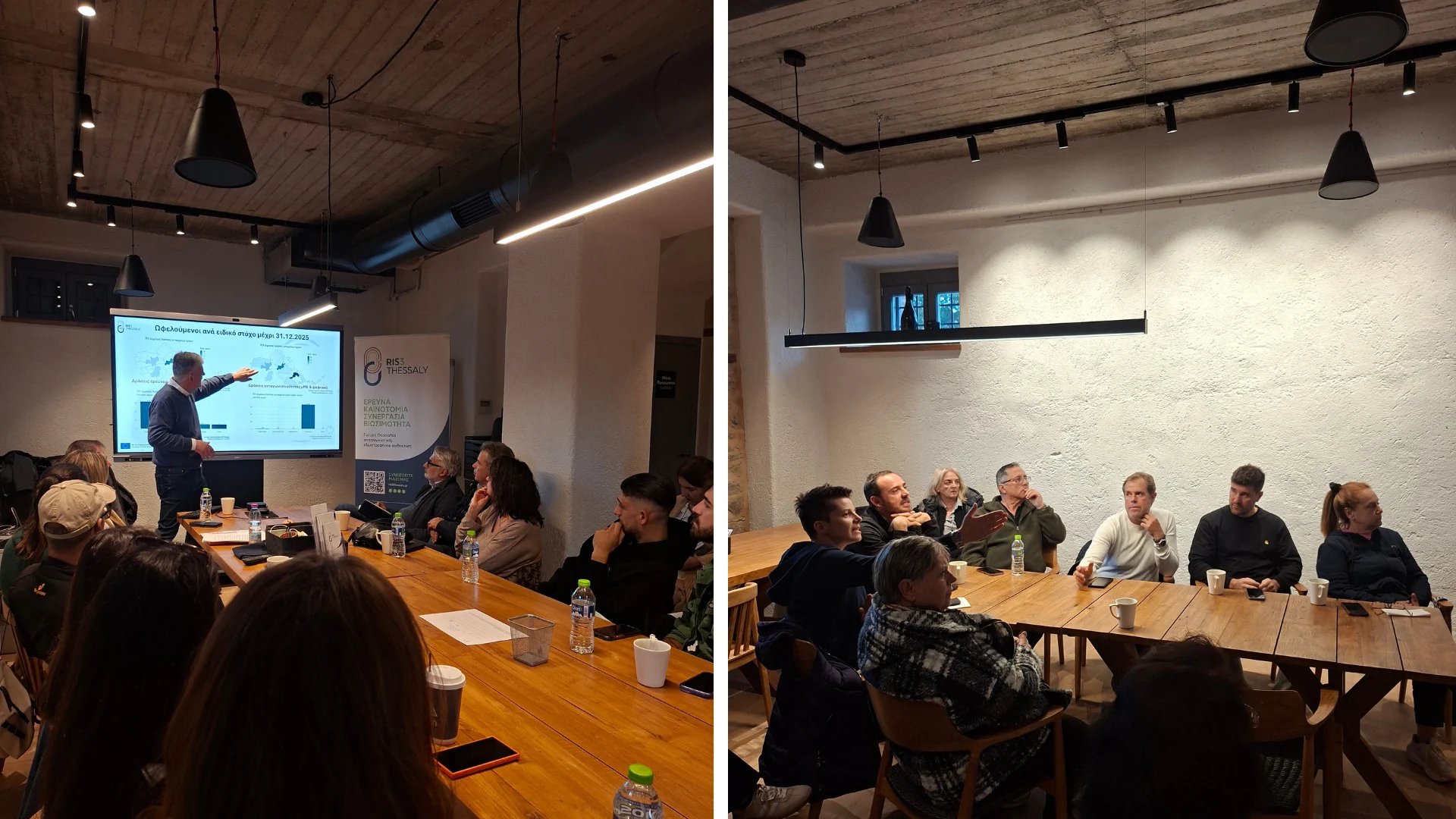
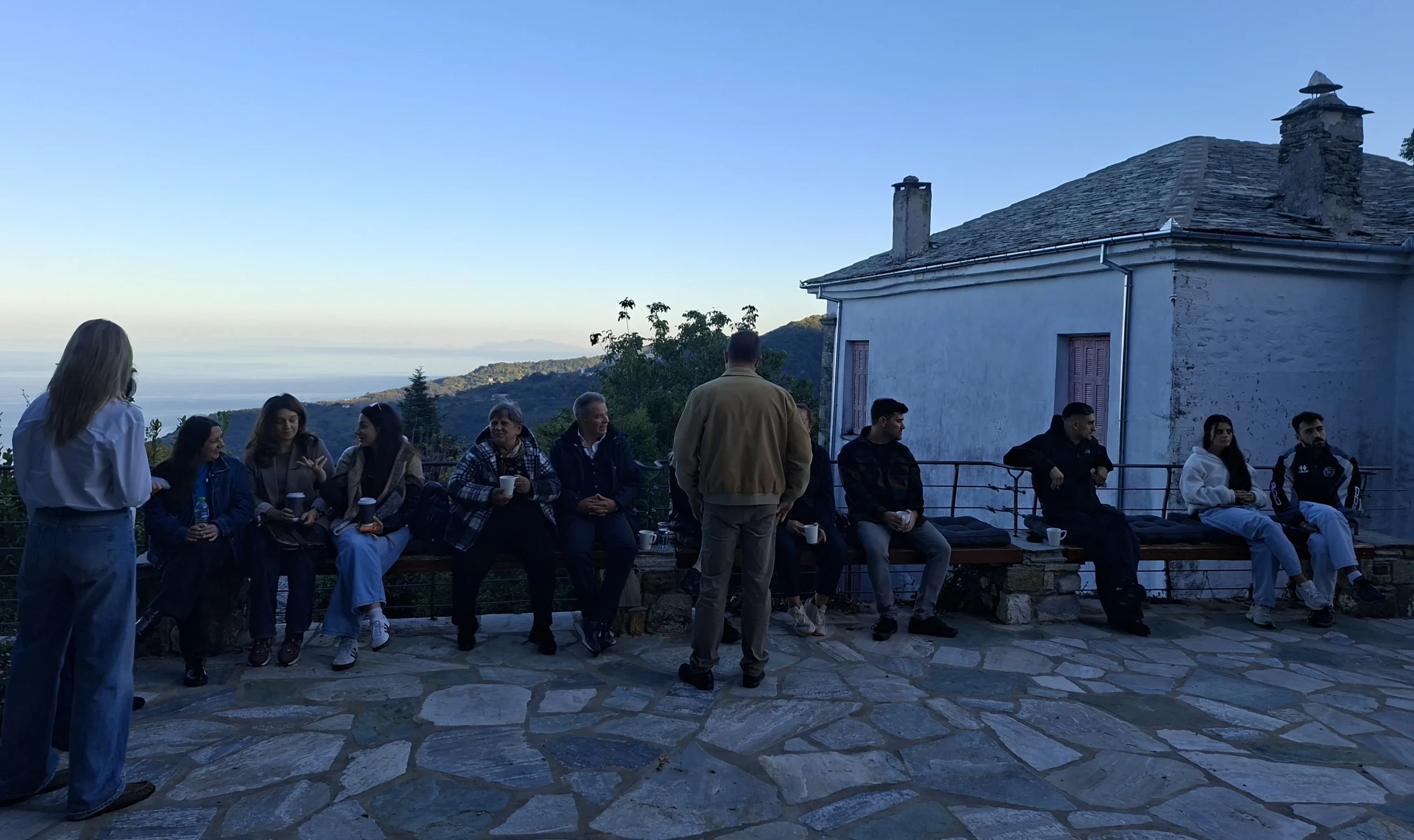
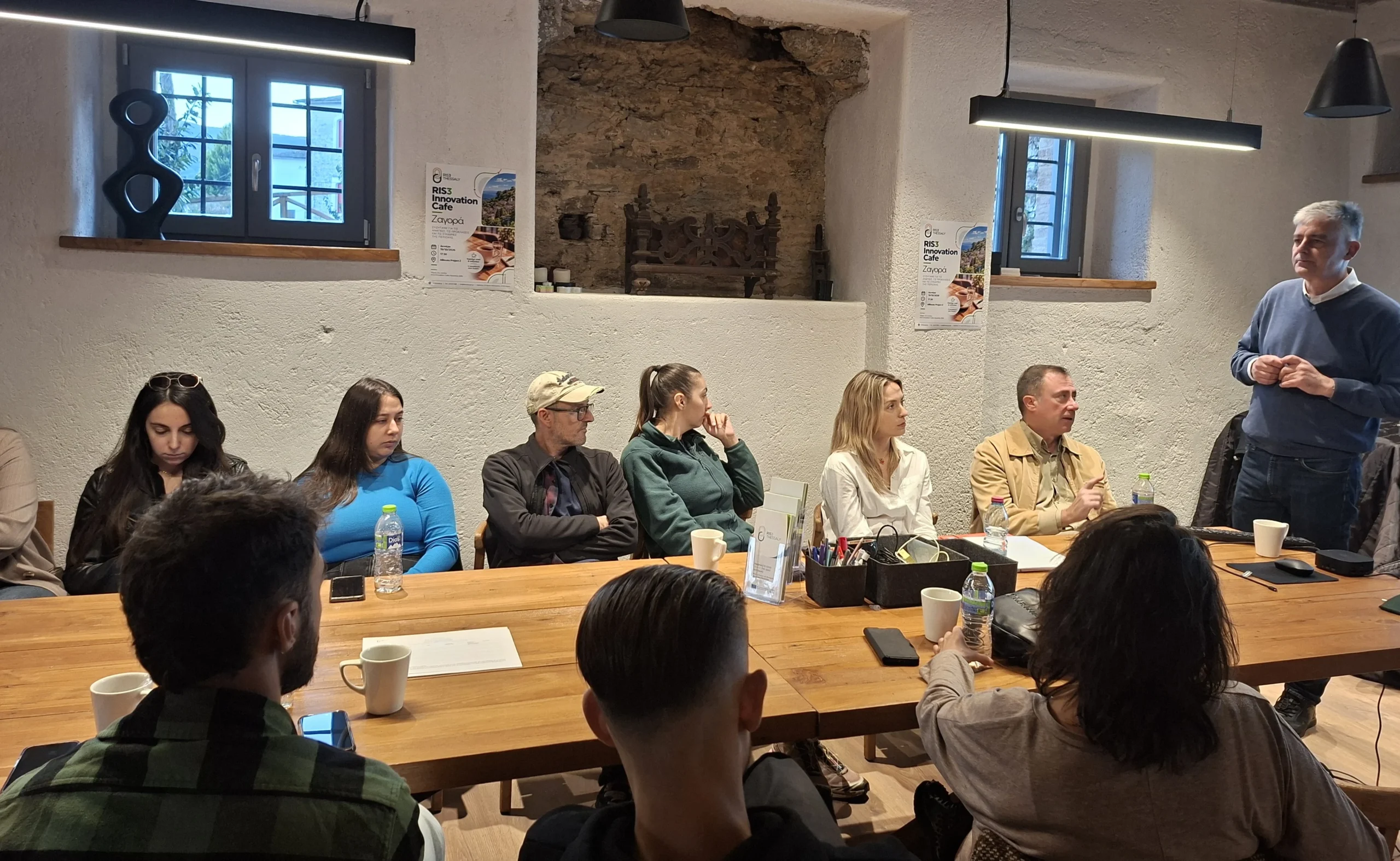
The need to formulate an integrated strategy for the tourism development of Eastern Pelion, the strengthening of cooperation between local businesses and the exploitation of agricultural production were the main axes of the discussion at the RIS3 Innovation Café in Zagora.
The Monday, October 19, 2026 was held in Project Z room In Zagora, another open meeting of the RIS3 Innovation Cafés series, organized by the Thessaly Region as part of the Mechanism for Monitoring, Supporting, Informing and Connecting Businesses with Research Institutions.
The event provided an opportunity for meaningful dialogue with representatives of local entrepreneurship and organizations in the region, aiming to highlight real needs, exchange views, and explore collaboration opportunities that can contribute to the sustainable development of Eastern Pelion.
Tourism development with strategy and identity
The central issue of the discussion was the need to develop Eastern Pelion as a tourist destination throughout the year, through a comprehensive and participatory strategic planning.
The participants emphasized that the region possesses significant natural, cultural, and productive characteristics that can be utilized to create a strong and recognizable tourism identity. Special mention was made of the development of alternative forms of tourism, such as hiking, experiential tourism, and religious tourism, as well as the possibility of creating integrated experiences that will enhance the attractiveness of the destination.
In this context, the importance of shaping a specific tourism product was highlighted before developing promotional and marketing activities. At the same time, reference was made to participatory planning initiatives that are currently underway at the local level, involving working groups and the participation of professionals, associations, and residents.
Collaboration as a driving force
Special emphasis was placed on the need to strengthen networking among the businesses of Eastern Pelion. As noted, although there are business ideas and significant development potential in the region, the implementation of new initiatives often exceeds the capabilities of a single business.
Therefore, the prospect of creating collaborative forms and networks was discussed that would allow businesses from different sectors to develop joint initiatives, combine services and contribute to the overall improvement of the tourist product.
The discussion highlighted the need for an approach to collaboration that is based on common development goals and the creation of value for the entire region, while maintaining the autonomy of individual companies.
From local production to new products with added value
An important part of the meeting was also dedicated to the primary sector, focusing on apple production and the activity of local cooperatives.
The potential for further utilization of agricultural production through processing, the development of new products, and cooperation between producers and businesses was highlighted.
The strong recognition that Zagora already enjoys through its apple production was mentioned as an important comparative advantage that could be utilized more widely, linking agricultural food with the tourist identity and the promotion of the region.
Connecting local initiatives with research and innovation
During the discussion, the possibilities of utilizing financial instruments and developing collaborations between businesses, cooperatives, universities, and local organizations were also examined.
There was particular interest in the possibility of supporting initiatives related to strategic planning, the development of local identity and the creation of collaborative networks.
In this context, the importance of the timely preparation of mature proposals and the formation of appropriate collaborative structures was highlighted, so that local entities can capitalize on future funding opportunities.
At the same time, the need was highlighted for public resources to be directed towards interventions that provide substantial, measurable, and lasting benefits for the local economy and society.
From the dialogue to the prospects of cooperation
The Zographis RIS3 Innovation Café highlighted the importance of participatory planning, intersectoral cooperation, and the utilization of the unique characteristics of each region to create new development perspectives.
The concerns and proposals submitted constitute a useful basis for further exploring collaborations between local entrepreneurship, research institutions, and the Thessaly Region, within the framework of the Regional Smart Specialization Strategy (RIS3).
Through the Innovation Cafés cycle, the Thessaly Region continues to strengthen open dialogue with local communities, seeking to connect their real needs with research, innovation, and the potential for sustainable development.
More information: www.ris3thessaly.gr
We listen. We connect. We innovate. We move forward.
RIS3 Innovation Cafés – a dialogue that travels throughout Thessaly.